
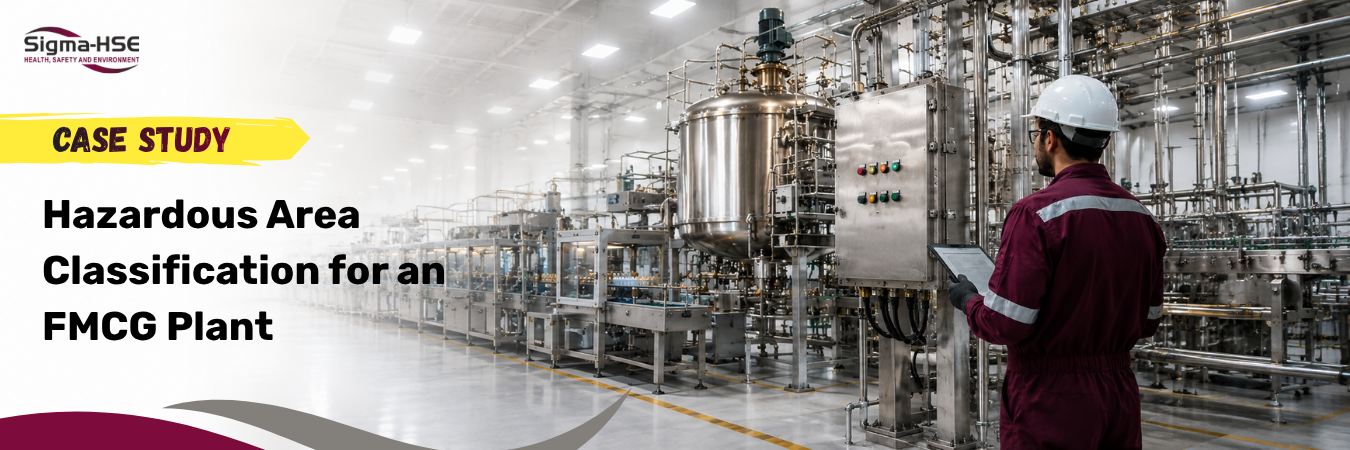
A leading global FMCG manufacturer operating a large production facility engaged Sigma-HSE to conduct a comprehensive Hazardous Area Classification (HAC) study. The facility handled a variety of combustible powders, flammable liquids, perfumes, solvents, diesel fuel, LPG cylinders, and hydrogen-generating battery charging systems.
The objective was to identify areas where explosive gas, vapor, or dust atmospheres could occur and establish appropriate hazardous zones for safe selection and installation of electrical equipment.
The facility included multiple operations with potential ignition and explosion risks:
In addition, several locations had ordinary electrical fittings installed close to potential release sources, requiring a detailed review of hazardous area requirements.
Sigma-HSE conducted:
The study identified hazardous zones associated with:
Several improvement opportunities were identified, including enhanced ventilation, grounding and bonding systems, hazardous-area-rated electrical equipment, spill control measures, dust management practices, and gas detection systems.
The HAC study enabled the client to:
✔ Identify and classify all hazardous locations across the facility
✔ Select appropriate explosion-protected electrical equipment
✔ Reduce ignition risks associated with flammable gases, vapors and combustible dusts
✔ Improve compliance with international hazardous area standards
✔ Strengthen process safety and operational reliability
✔ Support future facility modifications and audits with a documented HAC basis
The project provided a clear hazardous area classification framework for the entire facility, helping management implement appropriate engineering and operational controls while ensuring the safe installation and operation of electrical equipment in potentially explosive atmospheres.
Sigma-HSE continues to support industries worldwide with Hazardous Area Classification (HAC), Dust Hazard Analysis (DHA), HAZOP, LOPA, QRA, ATEX Compliance, Explosion Safety, and Process Safety Management studies.

© 2024 Sigma-HSE (India) Pvt Ltd | Registered in India No. U93000DL2014PTC266010 | Designed By WebClixs
 India
Site
India
Site
 UK Site
 US Site